
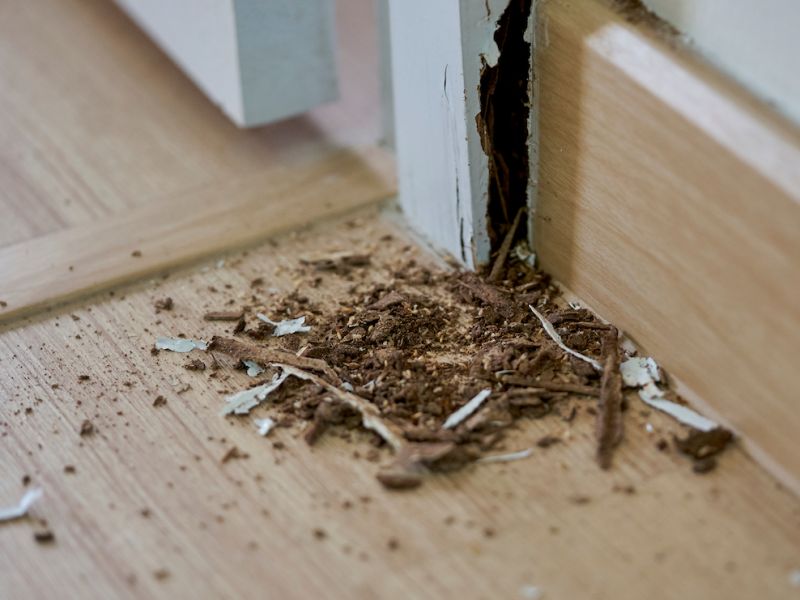

There is a uniquely unsettling feeling that comes with discovering compromised wood in your home. Whether you are poking at a spongy baseboard during a routine cleaning, noticing a warped window sill, or feeling your heel dip slightly into a porch floorboard, structural wood damage instantly triggers a wave of anxiety. For many homeowners, the immediate assumption points straight to termites. These notorious wood-destroying insects have earned a terrifying reputation for reducing solid framing to hollow shells behind closed walls. Yet, insects are not the only silent threat capable of wreaking havoc on a residential property.
Fungal decay, commonly known as wood rot, causes just as much structural destruction as termites, operating under an entirely different set of rules. Mistaking one for the other can lead to wasted money, ineffective treatments, and worsening damage. Treating a fungal decay problem with termiticide does nothing to stop moisture, just as spraying a fungicide over an active termite colony will leave the insects completely unfazed. Learning how to properly distinguish between termite damage and wood rot ensures you apply the correct remedy before minor structural issues escalate into expensive disasters.
The Nature and Mechanics of Wood Rot
To understand wood rot, you have to understand its primary fuel: moisture. Wood rot is not caused by bugs or mechanical wear; it is the result of fungal spores attacking damp timber. These microscopic spores are perpetually airborne, settling on any exposed wood surface. In a dry environment, they remain harmless and dormant. However, when the moisture content inside wood rises above twenty percent and lingers there for an extended period, those spores germinate, grow thread-like structures called hyphae, and begin digesting the cellulose and lignin that give wood its structural strength.
Wood rot is generally categorized into two main types: wet rot and dry rot. Wet rot is far more common in residential properties and typically develops in areas subject to chronic water exposure, such as around leaky plumbing pipes, unsealed window frames, or poorly flashed rooflines. Wood affected by wet rot often feels soft and spongy to the touch, darkens in color compared to surrounding healthy timber, and may crack or warp. When completely dry, wet rot wood shrinks slightly and breaks down into uneven, longitudinal chunks.
Dry rot is a more aggressive and destructive form of fungal decay, despite its misleading name. The fungus causing dry rot possesses unique moisture-conducting strands that allow it to transport water across dry, impermeable materials like brick or concrete, spreading from a damp crawlspace to dry framing timbers upstairs. Dry rot makes wood brittle, dark, and heavily cracked, often featuring a distinct cubical fracture pattern. If you scrape dry rot, it frequently crumbles into fine, powdery dust or large, dry chunks that snap with very little resistance.
The Mechanics of Termite Destruction
While wood rot requires moisture to feed fungi, termites require wood to feed themselves. These social insects consume cellulose, the primary organic compound found in plant cell walls and timber. In North America, the two most common culprits are subterranean termites and drywood termites, each leaving distinct signatures behind.
Subterranean termites live in massive colonies underground and build mud tubes across foundation walls to bridge the gap between the soil and your home framing. They require high moisture levels to survive and prefer soft, damp, or decaying wood because it is easier to chew through. However, unlike wood rot fungi, subterranean termites do not need moisture to stay everywhere they travel; they maintain a damp environment inside their mud tubes and galleries.
Drywood termites, by contrast, do not need contact with the soil and frequently infest dry, sound lumber in attics, roof framing, and furniture. Regardless of the species, termites share a defining behavioral trait: they consume wood from the inside out. Worker termites eat away the softer springwood inside a board while meticulously leaving the hard outer growth rings and a thin outer veneer completely intact. This means a structural stud can look perfectly solid and normal from the outside while being hollowed out into a fragile honeycomb on the inside.
Key Differences in Texture, Appearance, and Probing
When you are investigating a suspicious area of damaged wood, a simple physical test using a flathead screwdriver or an ice pick can reveal whether you are dealing with insects or fungi.
If you press your tool into wood affected by wood rot, the material typically feels uniformly spongy, wet, or crumbly. The tool will sink into the wood with soft resistance, and the damaged fibers will pull away in mushy shreds or dry, brittle cubes. You will not find any hard interior shell because fungal decay affects the entire mass of the wood fairly evenly based on moisture penetration.
When you probe termite-damaged wood, the experience is entirely different. You will often hit a hard exterior layer of wood before the tool suddenly punches straight through into a hollow cavity. If you peel back that thin surface veneer, you will reveal a maze-like interior network of tunnels and galleries. A critical telltale sign of termite activity is the presence of dried mud, soil, or frass packed neatly inside these hollowed-out channels. Termites line their galleries with excrement and soil to maintain humidity, whereas rotted wood contains no mud or insect droppings.
Secondary Clues and Environmental Context
Beyond the physical condition of the wood itself, your immediate surroundings provide vital clues regarding the source of the destruction.
Look closely at the surrounding environment for moisture issues. If the damaged wood is located directly beneath a leaking gutter, adjacent to a rotting window sill exposed to driving rain, or in a dirt-floored crawlspace with high humidity, wood rot is the prime suspect. Fungi cannot initiate or thrive without a continuous source of moisture.
Conversely, if the wood is dry, solid in appearance, and located far away from any obvious plumbing leaks or roof drips, look closely for insect evidence. Check for discarded translucent wings near windowsills during spring mating seasons, faint clicking sounds behind drywall caused by soldier termites banging their heads to alert the colony to danger, and tiny piles of hexagonal, sand-like pellets known as frass pushed out of tiny kick-out holes by drywood termites. If you spot exterior mud tubes running up concrete foundation walls, you are dealing with an active subterranean termite infestation regardless of how the wood feels.
Remediation and Repair Strategies
Once you have correctly identified whether your structural issue stems from moisture-fueled decay or hungry insects, your remediation strategy must match the root cause.
If your diagnosis points to wood rot, stopping the source of moisture is your absolute first and most important step. Fixing a leaking roof pipe, repairing faulty flashing, or improving crawlspace ventilation halts the fungal growth in its tracks. Once the wood dries completely, you can assess the structural integrity. If the rot is superficial, you can scrape away the decayed material, apply a liquid epoxy wood consolidant to harden the remaining fibers, and patch the area with structural wood filler. For severely compromised structural studs or joists, cutting out the rotten section and sistering a fresh, pressure-treated board alongside it is mandatory.
If your diagnosis confirms termite damage, calling a licensed pest control professional is the immediate priority. Eliminating termites requires specialized liquid termiticides, bait stations, or fumigation depending on the species involved. Once the active infestation is fully eradicated, a skilled carpenter must evaluate the structural load-bearing capacity of the damaged framing. Hollowed-out studs, joists, and subflooring must be reinforced or replaced entirely to restore the structural safety of your home.
Protecting Your Investment Moving Forward
Both wood rot and termite damage share a common underlying enabler: neglect. Regular home maintenance remains your best line of defense against both threats. Keep your gutters clean and direct downspouts at least six to ten feet away from your home foundation. Ensure soil and mulch around your home exterior sit at least six inches below the wooden siding, preventing a direct bridge for subterranean termites. Inspect your plumbing fixtures and roof flashing annually. By managing moisture and keeping an observant eye on your property, you can catch structural issues in their infancy and protect your home for decades to come.

Comments are closed.